Karesansui (dry landscape garden)
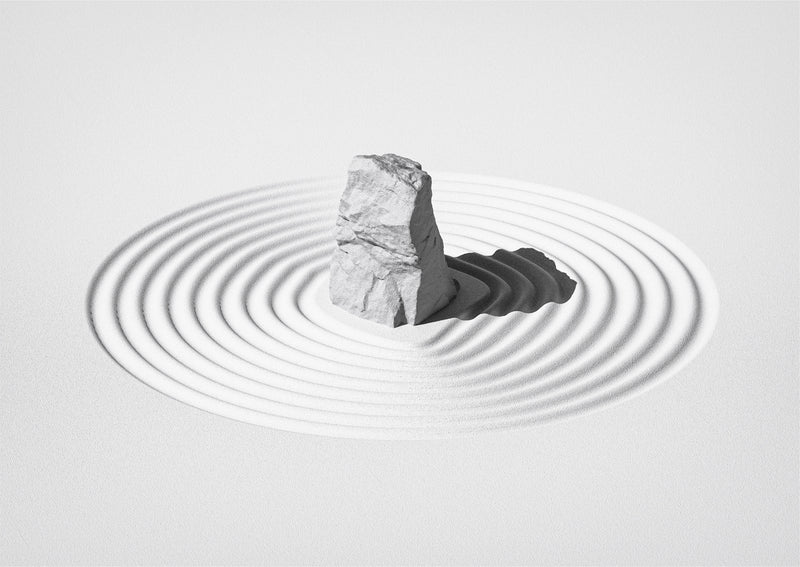
枯山水とは、白砂や石を用いて自然の風景を抽象的に表現する日本庭園の一形式です。 水流や広がりが砂紋によって最小限に表現され、余白に無限の情景を想像させるという特徴があります。
Karesansui is a form of Japanese garden that abstractly represents natural landscapes using white sand and stones. Flowing water and spatial expanse are expressed in minimal form through raked sand patterns, allowing the empty space to evoke an infinite range of imagined scenery.
shin-karesansui
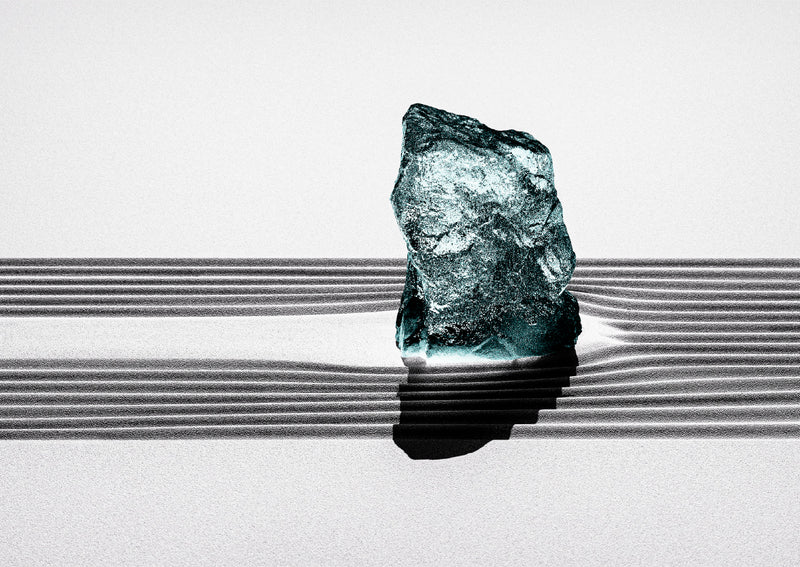
heri:syncの伝統を現代に同期するという試みを体現するグラフィックデザイン。枯山水を現代の技術でデジタル化し、日本の技術を通じて手に取れるものへと昇華します。
A graphic design that embodies heri:sync’s attempt to synchronize tradition with the present. By digitally reinterpreting karesansui (Japanese rock gardens) through contemporary technology, it is elevated into a tangible form through Japanese craftsmanship.
Void Reveals Entity
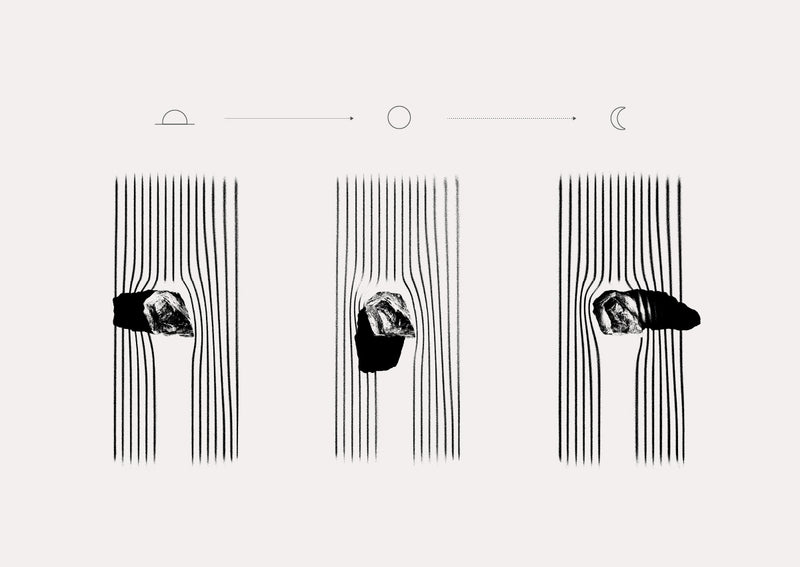
枯山水を3Dソフトでバーチャルに作り出し、朝/昼/夕、それぞれの時間に現れる影だけで表現しました。余白に情景を想像させる枯山水ならではの表現をグラフィックデザインに転換し、影が作り出した余白に実体と時間の流れを浮かび上がらせます。
A virtual karesansui was constructed using 3D software and expressed solely through the shadows cast at different times of day: morning, noon, and evening.By translating the quintessential karesansui expression, where emptiness evokes imagined landscapes, into graphic design, the shadows carve out negative space that reveals both physical presence and the passage of time.
inherit the technique
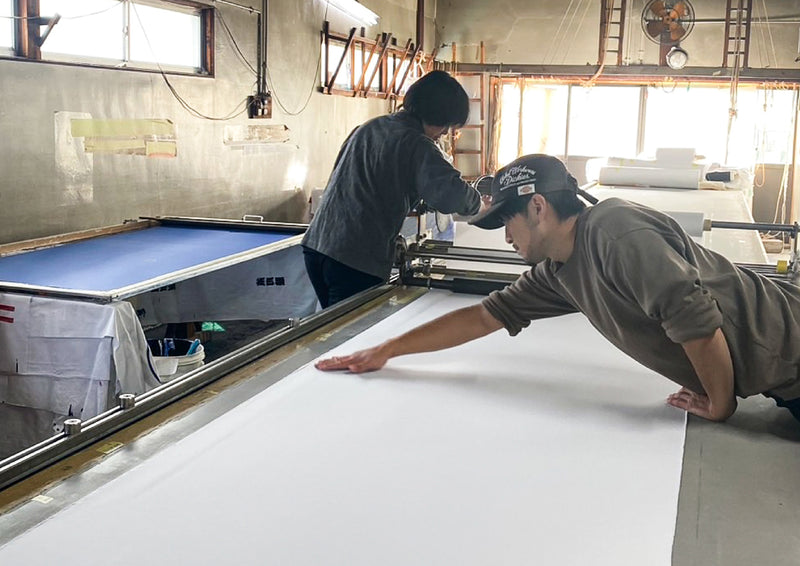
染め工程を担うのは、1921年創業の伊藤染工場。古来より伝わる「印染」の技術を継承する岩手県の老舗です。まずは白生地のシワや歪みを直して台に張り込む張り手を行い、その上に型を配置して位置を定める型置きへと進みます。
染工程:株式会社伊藤染工場(岩手県花巻市)
The dyeing process is entrusted to Ito Some Kojyo, a historic dyehouse founded in 1921 in Iwate Prefecture. They are the guardians of "Shirushi-zome," a traditional Japanese dyeing technique passed down for generations. The process begins with "Hari-te" (Tensioning), where the white fabric is stretched to correct any distortion, followed by "Kata-oki," where stencils are meticulously aligned to define the design.
Dyeing Process: Ito Some Kojyo (Hanamaki City, Iwate, Japan)
inherit the technique
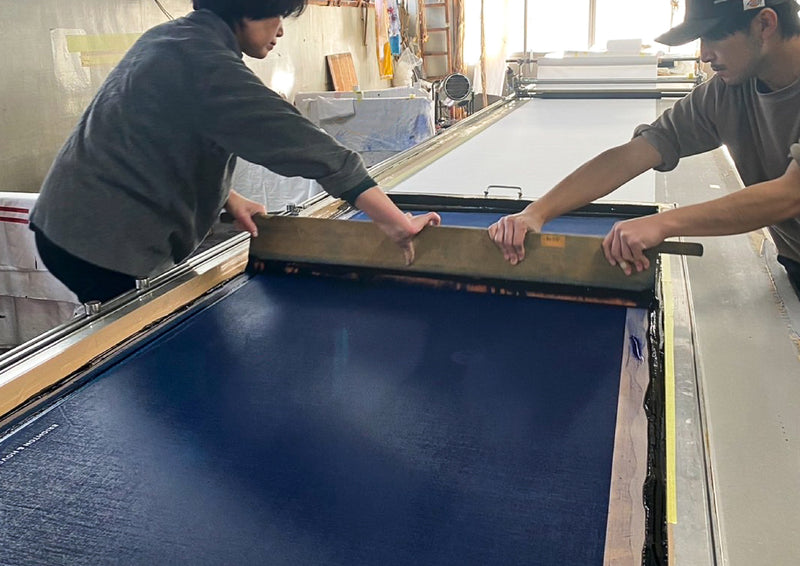
採用した技法は「手捺染」。型枠の中に染料を流し込み、職人がヘラを使って手作業で刷り込んでいく手法です。機械プリントとは異なり、職人が力加減や回数を調整しながら染めるため、繊維の奥まで染料が馴染みます。
染工程:株式会社伊藤染工場(岩手県花巻市)
We utilise "Tenassen" (Hand Screen Printing). Unlike machine printing, an artisan pours dye into a frame and manually forces it through the mesh using a squeegee. By adjusting the pressure and number of strokes by hand, the artisan ensures the dye penetrates deep into the fibres, creating a richness and depth of colour that machines simply cannot replicate.
Dyeing Process: Ito Some Kojyo (Hanamaki City, Iwate, Japan)
inherit the technique
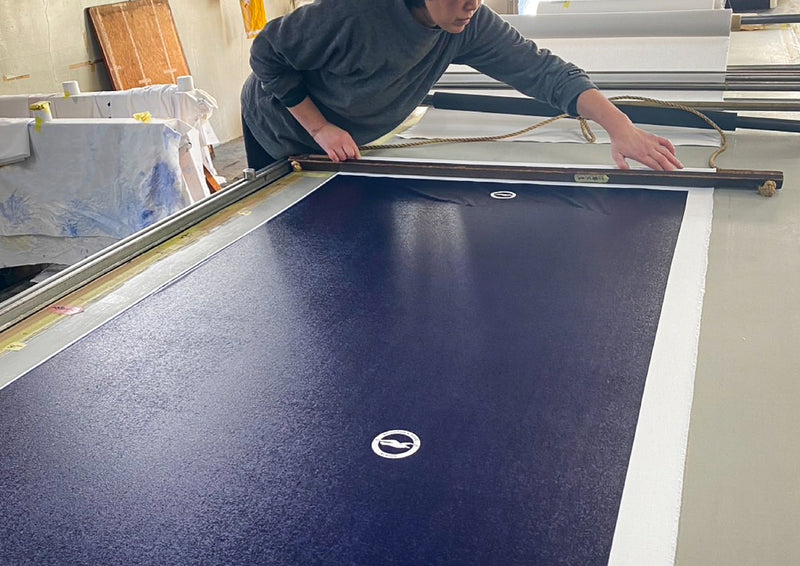
「印染」は元々、神社の幟や大漁旗、半纏など、屋外で使用される象徴的な布製品に使われてきた技術です。遠くからでも識別できる鮮明な発色と、雨風や日光に晒される環境にも耐えうる色持ちの良さが特徴です。
染工程:株式会社伊藤染工場(岩手県花巻市)
"Shirushi-zome" was originally developed for outdoor symbols such as Shinto shrine banners and "Tairyoki" (Fisherman's Grand Catch Flags). Its defining characteristics are vivid colours that can be identified from a distance and exceptional durability against wind, rain, and sunlight. It is a technique born to withstand the elements—perfect for the stadium.
Dyeing Process: Ito Some Kojyo (Hanamaki City, Iwate, Japan)
inherit the technique
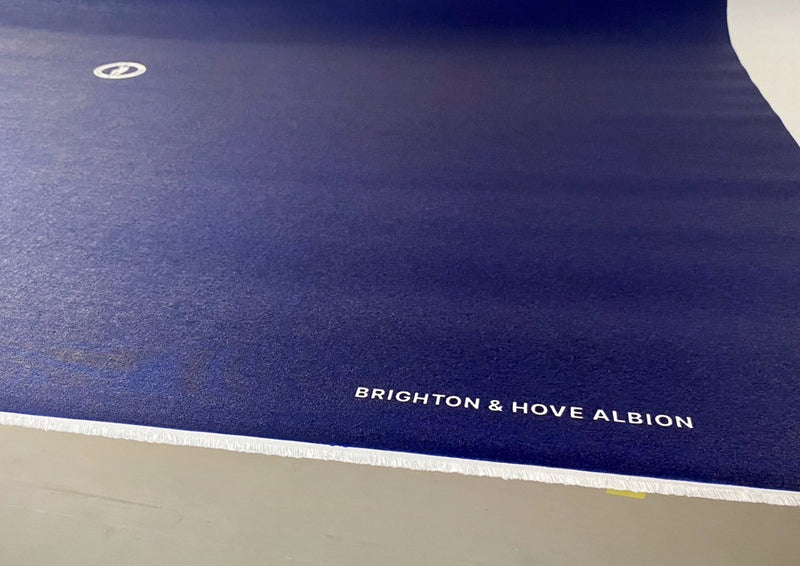
ロゴや文字として白く残す部分には、染料が入らないように防染糊が置かれています。この糊が壁となり、隣り合う色が混ざるのを防ぎます。デジタルプリントとはまた異なる、エッジの効いた境界線の美しさは、この物理的な防染によって生まれます。
染工程:株式会社伊藤染工場(岩手県花巻市)
To create the white logos and lettering, a "Resist Paste" is applied to prevent the dye from entering specific areas. This paste acts as a physical wall, stopping colours from bleeding into one another. The result is a sharp, crisp boundary with an "edged" beauty that digital printing cannot achieve.
Dyeing Process: Ito Some Kojyo (Hanamaki City, Iwate, Japan)
inherit the technique
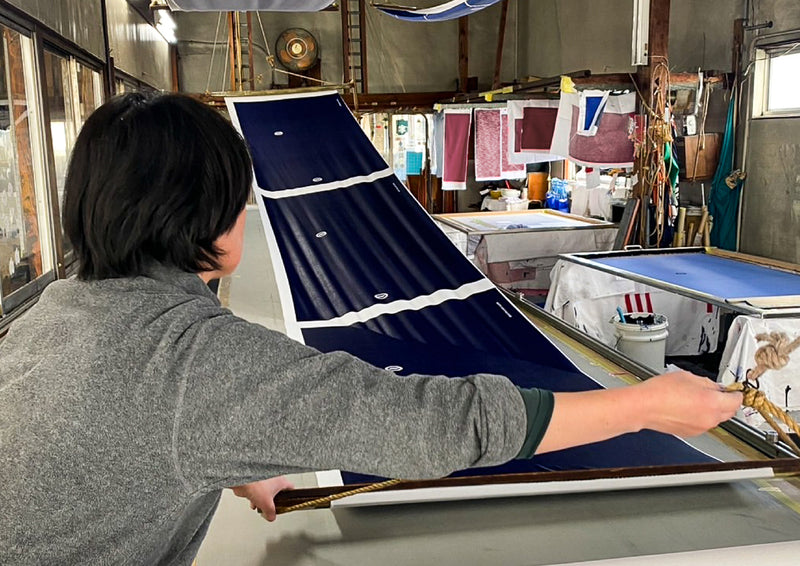
生地は裁断前の一反の状態で染め上げられます。長い台の上に広げられた生地に対し、職人が移動しながら一版ずつ丁寧に染めを繰り返します。オートメーションではなく、人の目と手で確認しながら進められる、根気のいる作業です。
染工程:株式会社伊藤染工場(岩手県花巻市)
The fabric is dyed as one continuous bolt (Tan) before cutting. Spread across a long table, the artisan moves along the fabric, dyeing it one section at a time with the stencil. This is not automation; it is a painstaking task requiring patience, relying entirely on the human eye and hand to ensure perfection.
Dyeing Process: Ito Some Kojyo (Hanamaki City, Iwate, Japan)
inherit the technique
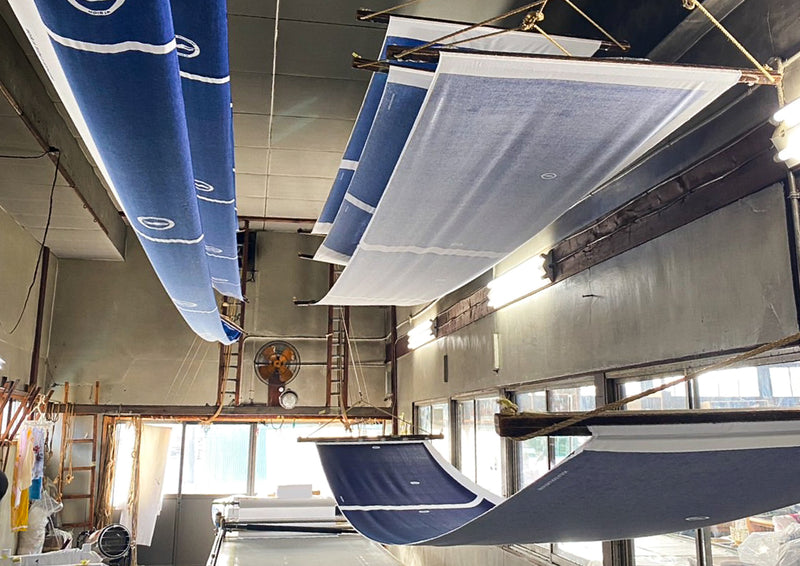
染料を含んだ生地は、工場の天井高くに吊るされ、自然の風の中で乾燥自然乾燥で染料を定着させます。その後、大量の水で余分な糊や染料を洗い流す水元の工程に入り、清潔な生地へと仕上がります。
染工程:株式会社伊藤染工場(岩手県花巻市)
Once dyed, the fabric is suspended high in the factory rafters, where it is cured by the natural breeze to fix the colour. It then undergoes "Mizumoto" (Washing), where abundant clear water washes away excess paste and dye. This reveals the pure, clean fabric with its final, vibrant contrast.
Dyeing Process: Ito Some Kojyo (Hanamaki City, Iwate, Japan)
inherit the technique
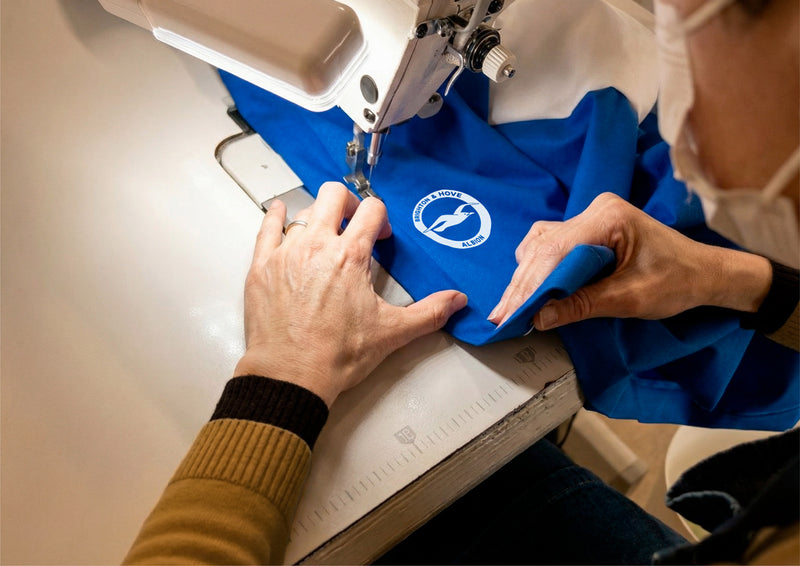
縫製後も、徹底した品質管理が行われます。寸法の確認や縫い目のチェックに加え、検針機による安全確認を実施。一つひとつの製品に不備がないか、出荷直前まで厳しい目で検品が行われ、完成となります。
染工程:国内縫製工場
Even after sewing, the work is not done. Each item undergoes rigorous quality control, including dimensional checks and seam inspections. Finally, every piece passes through a needle detector for safety. Only products that pass these uncompromising eyes are approved for shipment.
Sewing Process: Japanese Sewing Factory
inherit the technique
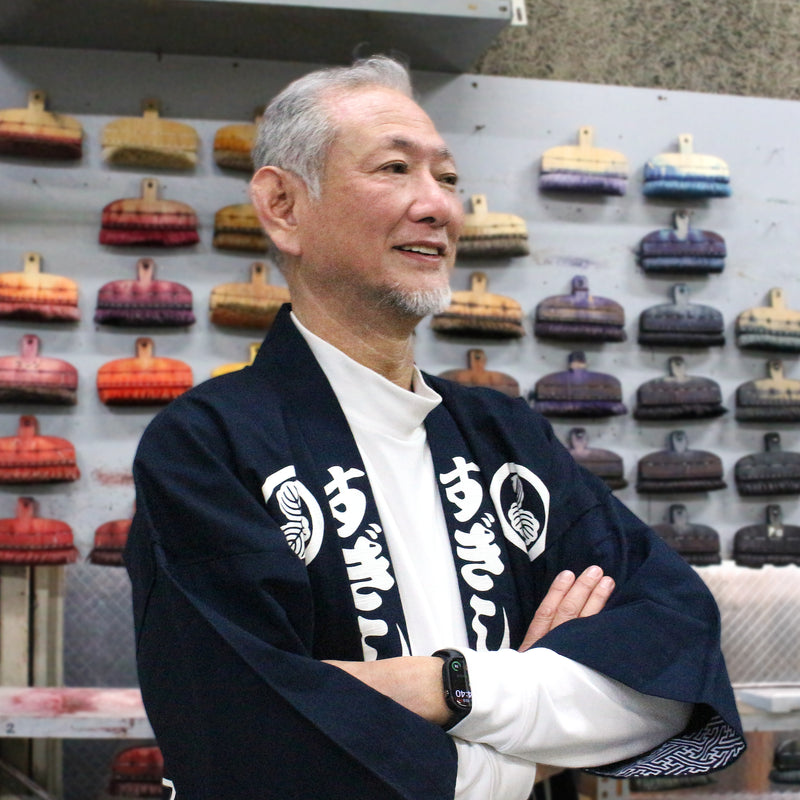
1936年創業、京都で続く印染の老舗のスギシタ有限会社、代表の杉下 永次さん。 伝統的な印染の技術を継承しながらも、現代のライフスタイルに合わせたモノづくりを実践しています。 本プロジェクトでは、伝統的な半纏の構造や染めの技法を、現代ファッションやスタジアムでの使用アイテムにどう落とし込むか、技術的な助言と監修をいただきました。
アドバイザー:スギシタ有限会社(京都府京都市)杉下 永次
Representative of a Kyoto dyehouse established in 1905, Eiji Sugishita is an innovator who preserves tradition while adapting craftsmanship to modern lifestyles. For this project, he provided essential technical supervision on how to translate the traditional structure of the Hanten and authentic dyeing techniques into functional gear for the modern stadium and fashion scene.
Advisor: Eiji Sugishita (Sugishita Co., Ltd., Kyoto City, Kyoto, Japan)
inherit the technique
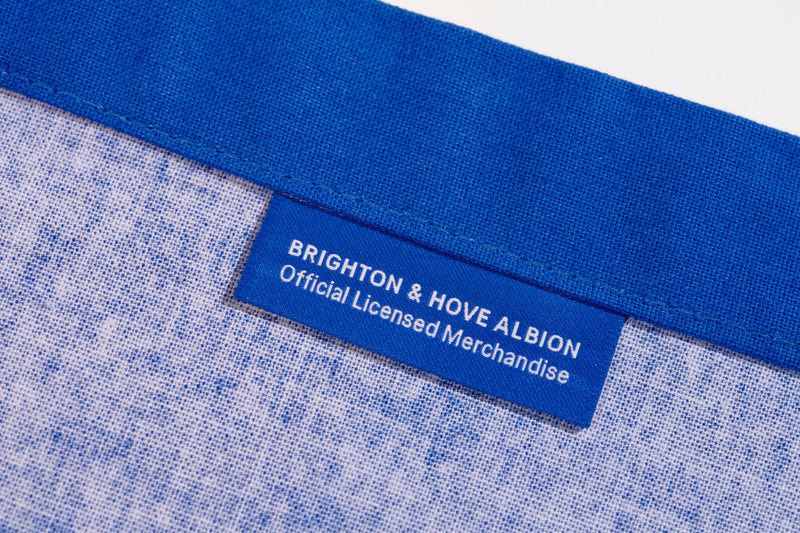
ブランドタグには、1925年創業の老舗が手掛ける「越前織」を採用しました。福井県の伝統工芸であるこの織りネームは、一般的なものより高密度で織り上げられます。そのため、複雑なロゴデザインや繊細な曲線も、プリントではなく「織り」によって忠実に再現されています。
"Official Licensed Merchandise"タグ:株式会社松川レピヤン(福井県坂井市)
For the brand tag, we adopted "Echizen-ori" (Echizen Weave) from a manufacturer founded in 1925. This traditional craft from Fukui Prefecture is woven at a much higher density than standard labels. As a result, even complex logos and delicate curves are faithfully reproduced through "weaving" rather than printing, adding a final touch of luxury.
"Official Licensed Merchandise" Tag: Matsukawa Rap Yarn (Sakai City, Fukui, Japan)